GCC Partner for Setting Up a Scalable Global Delivery Center in India: Building the Technology Foundation


A delivery center can hire fast and still fail to scale if its technology cannot keep up. Slow networks, weak access controls and inconsistent tooling turn growth into friction. The right GCC partner for setting up a scalable global delivery center in India designs the technology and security foundation before headcount ramps, so the center grows without rework.
This article explains the infrastructure decisions that determine whether your delivery center scales smoothly or stalls.
Why Technology Is a Scaling Constraint
Early on, a small team can work around weak infrastructure. At 500 or 1,000 people, those workarounds break. Onboarding slows because devices and access take weeks. Security gaps create audit findings. Teams use different tools, so global collaboration suffers.
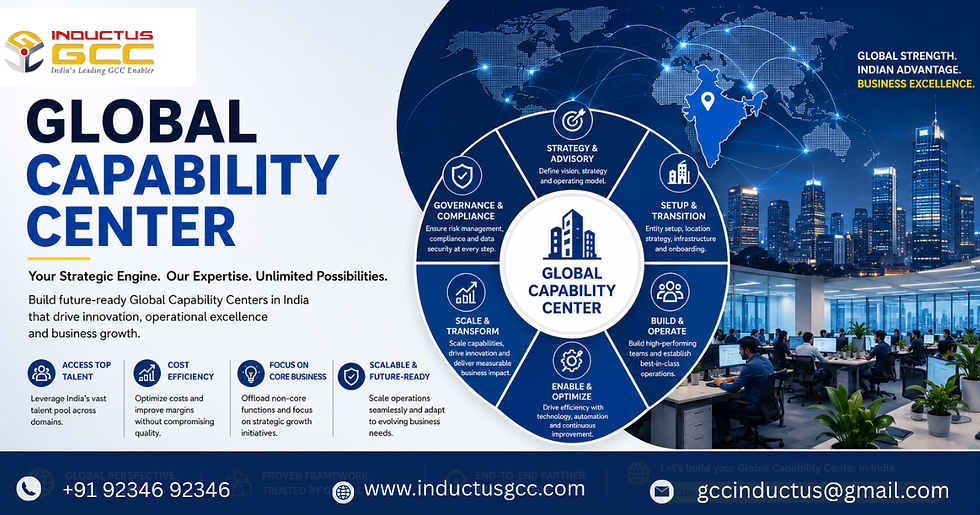
A partner who plans technology as a core workstream avoids these problems. For the wider setup scope, see our Global Capability Center services.
Step 1: Define the Technology Operating Model
Before buying anything, decide who owns what. Typical models include:
Parent-led: the global IT team provides and manages infrastructure
Center-led: the GCC runs its own IT and security operations
Hybrid: shared platforms from the parent with local support from the center
Each has trade-offs in control, speed and cost. A partner helps you choose based on your maturity, security needs and growth plans.
Step 2: Design Connectivity and Cloud Architecture
A global delivery center depends on reliable links to headquarters and other sites. Planning should cover:
Redundant network connections from multiple providers
Secure links to parent data centers and cloud environments
Cloud landing zones sized for future workloads
Performance testing for latency-sensitive applications
Building capacity ahead of demand is far cheaper than retrofitting a live center.
Step 3: Standardize Devices and Workplace Technology
Consistency makes scaling manageable. A partner sets standards for:
Laptop and device specifications
Collaboration and communication tools
Software licensing and provisioning
Service desk processes and response targets
When a new hire’s device, accounts and access are ready on day one, onboarding stays fast even during large hiring waves.
Step 4: Build Identity and Access Controls
Access management protects both data and delivery. Core elements include:
Single sign-on and multi-factor authentication
Role-based access tied to job functions
Automated provisioning and removal as people join, move or leave
Regular access reviews
Automation matters here. Manual access requests do not survive rapid growth.
Step 5: Embed Data Protection and Security Standards
Multinational parents expect the GCC to meet their security policies and often regulatory requirements. A partner aligns the center on:
Data classification and handling rules
Endpoint protection and monitoring
Secure development and change practices
Incident response procedures
Physical security for premises and equipment
Meeting these from the start avoids costly remediation during client or parent audits.
Step 6: Prepare Physical Infrastructure That Can Expand
Office space and utilities also affect scale. Look for:
Facilities with expansion options on adjacent floors or buildings
Reliable power backup and cooling
Secure access control and visitor management
Modular seating and meeting layouts
Choosing flexible premises avoids relocation when headcount outgrows the original footprint.
Step 7: Plan Business Continuity and Resilience
Delivery centers support critical global operations, so downtime has real consequences. Continuity planning should include:
Backup connectivity and power
Disaster recovery for key systems
Remote work capability for essential staff
Tested response plans for disruptions
Test these plans regularly, not just on paper.
Step 8: Monitor Performance and Plan Capacity
Scalable infrastructure needs visibility. Set up monitoring for network performance, system availability and service desk metrics. Review capacity quarterly against hiring plans, so upgrades happen before limits are reached.
Technology Readiness Checklist
Area | Ready When |
Connectivity | Redundant links tested to parent sites |
Devices | Standard images and fast provisioning |
Access | Automated, role-based, with regular reviews |
Security | Parent policies and audit controls met |
Facilities | Expansion space and power backup confirmed |
Continuity | Recovery plans documented and tested |
What to Look for in a Technology-Capable GCC Partner
Experience building multinational delivery centers in India
Security and compliance expertise aligned to global standards
Vendor relationships that shorten procurement and setup time
Capacity planning discipline tied to hiring forecasts
Post-launch support covering service desk and infrastructure operations
Ask for examples of how a partner scaled a center from its first hundred employees to several hundred. Their answer shows whether they plan for growth or only for launch.
Common Technology Mistakes
Sizing infrastructure only for day-one headcount
Leaving security alignment until after go-live
Allowing each team to choose its own tools
Relying on manual access requests
Skipping continuity testing
Key Takeaways
Technology determines whether a delivery center can scale without friction.
Choose a clear operating model for IT and security ownership.
Standardize devices, tools and access processes early.
Build security and continuity in from the start.
Plan capacity against hiring forecasts, not current headcount.
Frequently Asked Questions
Why does technology matter for a scalable delivery center? Weak infrastructure slows onboarding, creates security gaps and limits collaboration as headcount grows.
Who should own IT in a new GCC? It depends on maturity and policy. Parent-led, center-led and hybrid models each suit different situations.
How early should security be planned? Before launch. Aligning with parent policies early avoids costly remediation.
What makes onboarding fast during hiring waves? Standard device images, automated access provisioning and a ready service desk.
Do delivery centers need business continuity plans? Yes. They support critical operations, so backup connectivity, recovery plans and testing are essential.
Build a Delivery Center That Scales Without Friction
The right GCC partner for setting up a scalable global delivery center in India builds technology that grows with you. Speak with Inductus GCC to design your infrastructure, security and capacity plan before your first hiring wave.

Comments